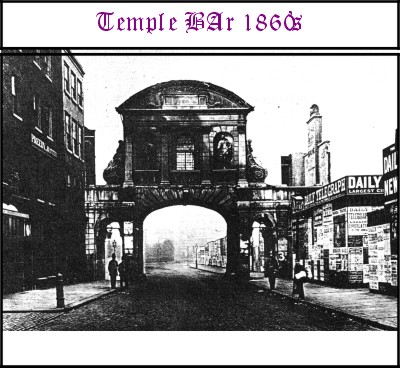
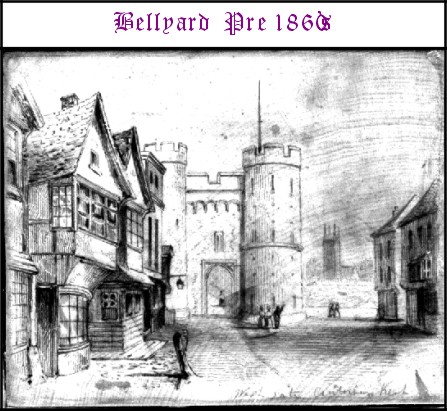
Temple Bar.
The Archway, designed by Wren, used to mark the border between the City and Westminster where Fleet Street becomes the Strand. The archway caused major traffic congestion and was removed in 1878
Its name comes from the Temple Church, which has given its name to a wider area south of Fleet Street, the Temple, once belonging to the Knights Templar, but now home to two of the legal profession's Inns of Court), which is located nearby.
A phenomenon of 18th century London was the coffee house, which became a popular place to debate ideas. Growing literacy and the development of the printing press meant that news became widely available. Fleet Street became the centre of the embryonic British press during the century.
18th century London was dogged by crime, the Bow Street Runners were established in 1750 as a professional police force. Penalties for crime were harsh, with the death penalty being applied for fairly minor crimes. Public hangings were common in London, and were popular public events.
Signatures of Charles Reader and Mary Ann Collis


Charles Reader was the 2nd child of Thomas and Charlotte Reader ( Nee Baud ) he was born in 1780 in Kensington, London and christened in Saint Mary's Abbotts Church on the 21 st May. .
As far as we can find Charlotte was a Huguenot. Charles was brought up in the book trade working for Longman Greens which was a family firm in the trade of printing and publishing of books. It was based in Patersnow Row.
1781 was a very important year for literature as a revolution started to between protestants and Catholics which also brought about access to books for all to read.. The only access to books before this was only for the elite society or through the churches. In the 1800's the times were to change with the railway system and Courts being upgraded through London so the area of Temple bar / Lincolns in to Westminster had a major make over. All of the old buildings , churches and run down lanes were demolished for progress. Within the first and second world war a lot of records were destroyed from the bombings.
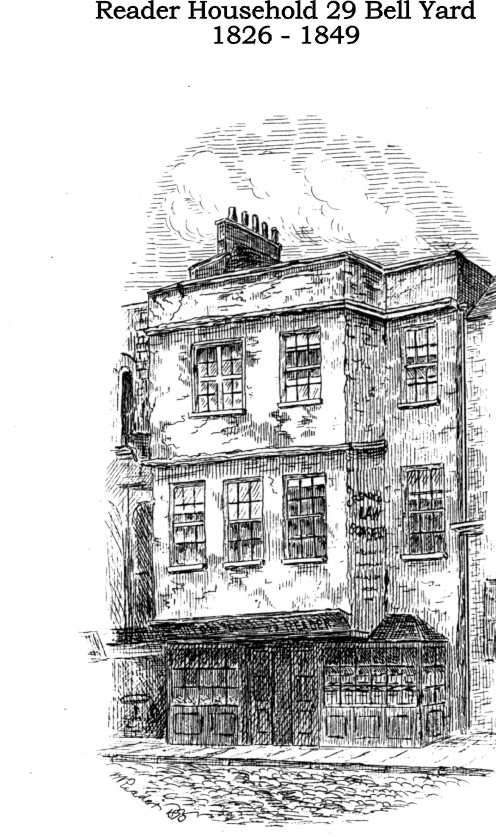
Charles Reader and Mary Ann Collis got married in 1802 at St James Piccadilly ( also known as St James Thorndike Westminster ) , which was Mary Ann's family parish. She was christened there in 1781. They resided at:
N0.8 Bell Yard, Temple Bar 1820 - 1822
No.9 Bell Yard, Temple Bar 1823 - 1825
No 29 Bell Yard, Lincolns Inn 1826 - 1849
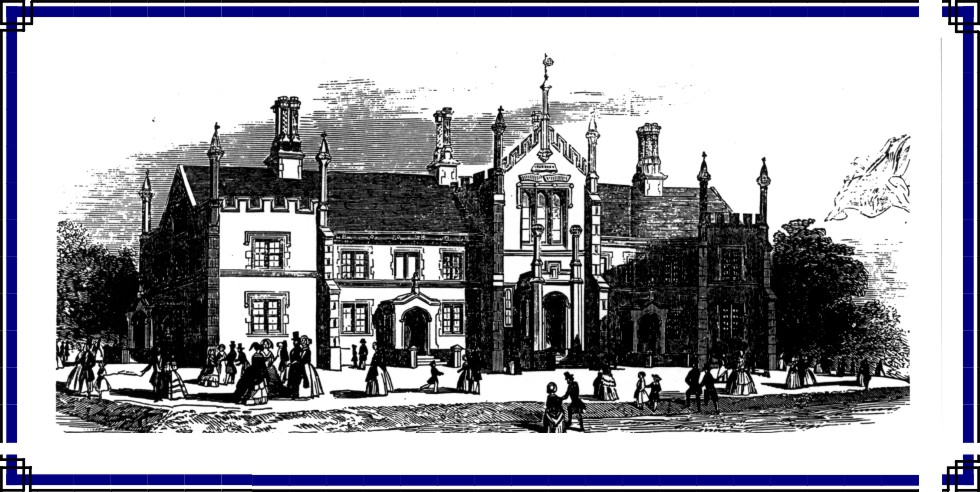
Charles and Mary retired to the Bookseller Retreat, Abbotts Langley in Waltham, Hertfordshire which was a high privelage. He died at the retreat in 23 November 1856 and is Burried at St Lawrence in Abbots langley. Mary died in 8 Mar 1860 and is also buried their.
Charles was registered as a Printer from 1820 to 1849.
In 1785 ( 9 Bell yard ) was a newspaper pamphlet shop owned by a Mr Pearce.
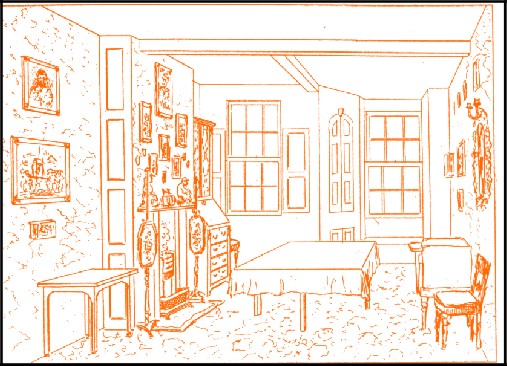
Left : The front lounge room illustrated in Sarahs Cowley Book of Poetry.
He worked for Longmans as a reseller in the book trade department then opened his own shop selling to the Schools, Law Courts.
Charles passed his interest of books and literature on to his children.
Mary and Charles had Eight children in total, of which three wrote poetry, one became a Librarian and the other also worked at Longman Greens like himself and became a Director.
Left: Abbotts Langley Booksellers Retreat
See the Reader London Family Tree tab for more details on the family.
